
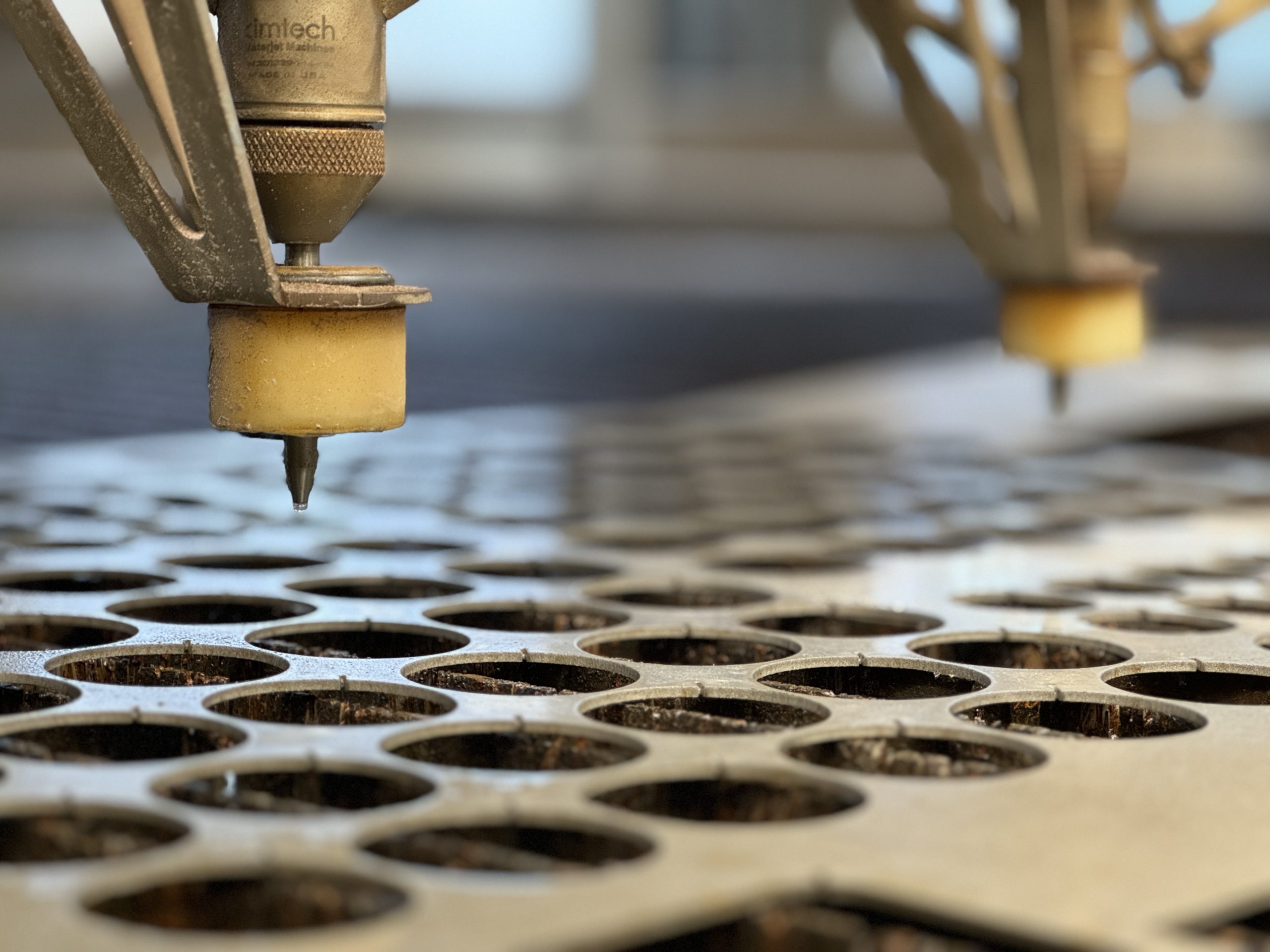
Choosing the right production method has a great impact on both quality, cost and delivery time. Many people choose laser or CNC out of habit, but in some cases water cutting the best option – especially when heat, material choice or plate thickness are critical factors.
What is waterjet cutting – briefly explained
Waterjet cutting is a cold cutting process in which the material is cut using water under very high pressure, often with an abrasive added. Because the process does not add heat, thermal effects, structural changes and deformation of the material are avoided.
Water cutting vs laser cutting
Laser cutting is fast and efficient for thin metal sheets, but has clear limitations:
Laser limitations:
Heat effect on the material
Risk of hardening and deformation
Limited material thickness
Less suitable for plastics and composites
Waterjet cutting – advantages:
No heat effect
Suitable for both metal, plastic and composite
Can cut large plate thicknesses
Preserves the material's original properties
When is waterjet cutting the best choice?
Waterjet cutting is particularly suitable in the following situations:
Thicker sheets of steel, stainless steel or aluminum
Plastic materials that can melt when heated
Composite materials and laminates
When edge quality is important but heat must be avoided
Small and medium-sized series
Prototypes and flexible manufacturing
Materials suitable for waterjet cutting
Waterjet cutting offers great material flexibility. Typical materials include:
Aluminum
Stainless steel
Structural steel
Plastic (PE, PA, POM, etc.)
Composite materials
Rubber and gasket materials
This makes the method particularly well suited for varied industrial projects.
Limitations of waterjet cutting
To choose the right method, it is important to be aware of the limitations:
Not suitable for complex 3D geometries
Less precise than CNC milling on micro tolerances
Surface may require post-processing in some cases
Therefore, waterjet cutting is often considered in combination with other production methods.
Summary – how to choose the right method
Select water cutting when:
Heating is not allowed
The material is plastic, composite or thick metal
The part is mainly 2D
Choose laser when:
The plates are thin
Speed is most important
The material is heat resistant
Choose CNC milling when:
3D geometry required
The tolerances are very tight
Unsure which method is right?
Contact us, we consider material, tolerances and production volume before choosing a method.